Address
304 North Cardinal
St. Dorchester Center, MA 02124
Work Hours
Monday to Friday: 7AM - 7PM
Weekend: 10AM - 5PM
Address
304 North Cardinal
St. Dorchester Center, MA 02124
Work Hours
Monday to Friday: 7AM - 7PM
Weekend: 10AM - 5PM
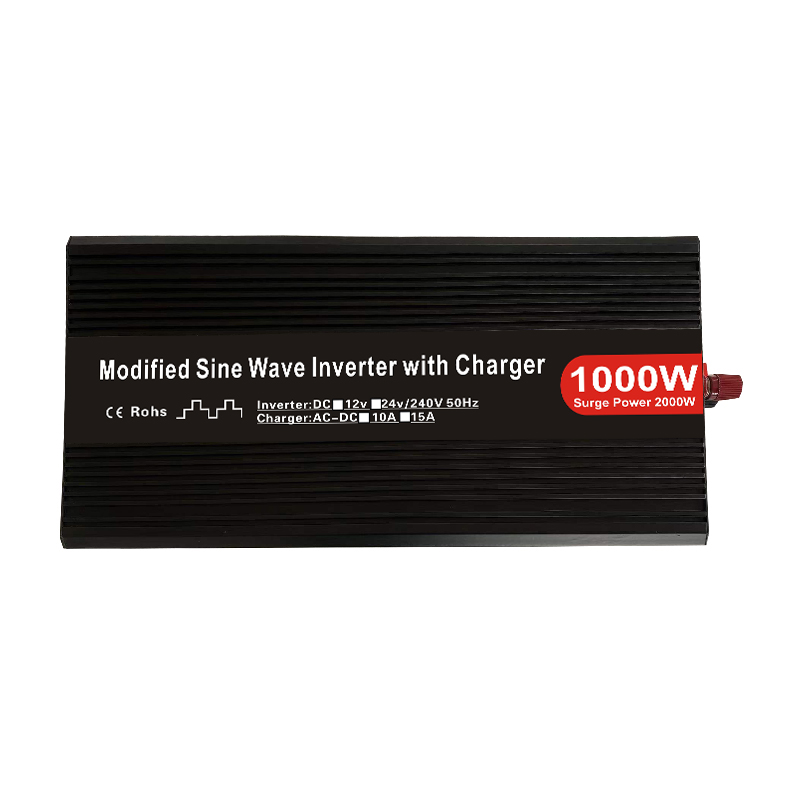
1000W Modified Wave UPS Inverter: A Neutral Guide to Compatible Home Appliances
In the realm of off-grid power solutions and emergency backup systems, the Uninterruptible Power Supply (UPS) inverter plays a pivotal role. Among the various options available, the 1000W Modified Wave UPS Inverter stands out as a cost-effective choice for many households. However, understanding exactly which home appliances it can safely and effectively power is crucial for both the longevity of your devices and the efficiency of your power system. This article provides a neutral, comprehensive guide to using a 1000W Modified Wave UPS Inverter with common home appliances.
Understanding the Modified Sine Wave
Before diving into specific appliances, it is essential to understand what a “modified wave” (or modified sine wave) actually is. Unlike the smooth, oscillating curve of the pure sine wave provided by your standard utility grid, a modified sine wave is a stepped approximation of that curve. It transitions abruptly between positive and negative voltages, creating a “stair-step” pattern.
While this technology is more affordable and efficient for basic power conversion, the abrupt transitions introduce harmonic distortion. This distortion is the key factor determining which appliances are compatible. Generally, appliances are categorized by their electrical loads: resistive, capacitive, and inductive. A 1000W Modified Wave UPS Inverter interacts very differently with each category.
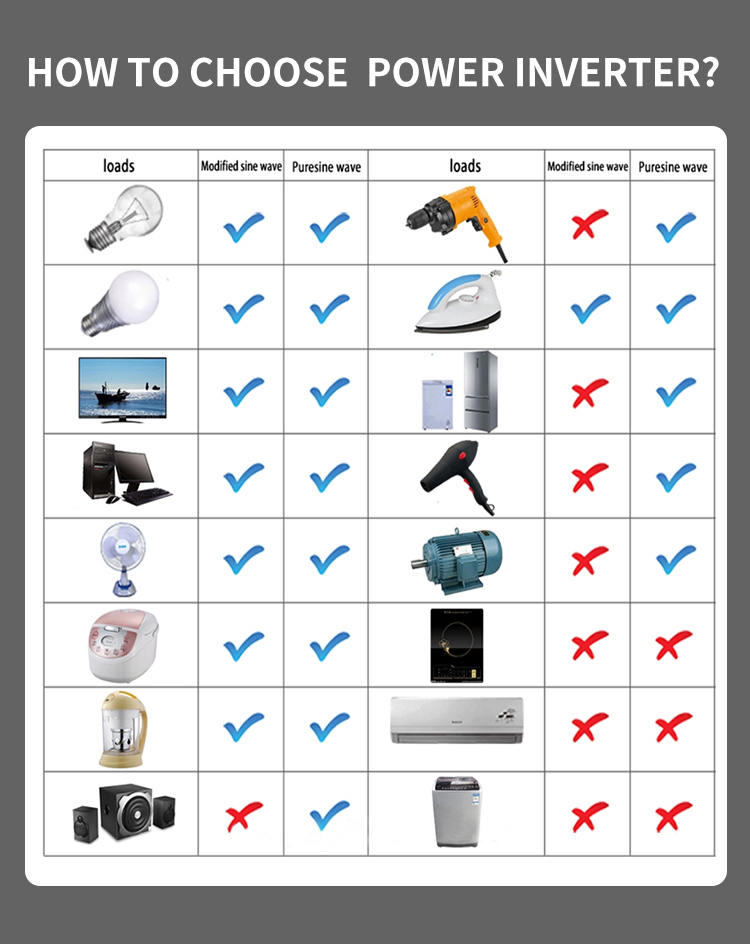
The Perfect Match: Resistive Load Appliances
Resistive loads are the simplest type of electrical load. They convert electricity directly into heat or light and do not rely on the smoothness of the electrical wave to function. For these devices, a modified wave inverter is virtually indistinguishable from standard grid power. A 1000W Modified Wave UPS Inverter capacity offers ample power to run several of these simultaneously.
The “Generally Compatible”: Capacitive and Electronic Loads
Capacitive and electronic loads include devices with circuit boards, transformers, and power supplies. This category includes most modern entertainment and office equipment. A 1000W Modified Wave UPS Inverter can usually power these, but with some caveats regarding efficiency and potential noise.
The “Proceed with Caution”: Inductive Load Appliances
Inductive loads contain motors, compressors, or magnetic transformers. This is where the limitations of a modified wave inverter become most apparent. Motors rely on the smooth rotation of the magnetic field provided by a pure sine wave. The stepped wave of a modified inverter causes the motor to jerk slightly with each step, leading to inefficiency, heat, and noise.
Power Management and Safety Considerations
Even if an appliance is electrically compatible, power management is vital. A “1000W inverter” refers to its continuous power output. It is unsafe to run devices that draw a continuous 1000W. A good rule of thumb is to utilize only 80% of the continuous rating, meaning you should aim for a maximum load of around 800W. This prevents overheating and ensures the inverter can handle minor power spikes.
Additionally, always ensure your battery bank is sufficient to support the inverter. A 1000W load draws a massive amount of current from a 12V battery (over 80 amps), requiring heavy-gauge cabling and a robust battery setup.
Conclusion
The 1000W modified wave UPS inverter is a versatile and budget-friendly tool for emergency power. It is perfectly suited for resistive loads like lights, heaters, and simple kitchen appliances. It can generally handle electronics like TVs and laptops, though with minor trade-offs in efficiency and noise. However, users should be wary of using it for inductive loads like refrigerators, pumps, and heavy-duty motors, as the harmonic distortion can lead to overheating and reduced equipment lifespan. By matching your appliances to the inverter’s capabilities, you can ensure a reliable and safe power supply during outages.