Address
304 North Cardinal
St. Dorchester Center, MA 02124
Work Hours
Monday to Friday: 7AM - 7PM
Weekend: 10AM - 5PM
Address
304 North Cardinal
St. Dorchester Center, MA 02124
Work Hours
Monday to Friday: 7AM - 7PM
Weekend: 10AM - 5PM
Chinese Solar Power Inverters: Powering the Global Energy Transition in 2026
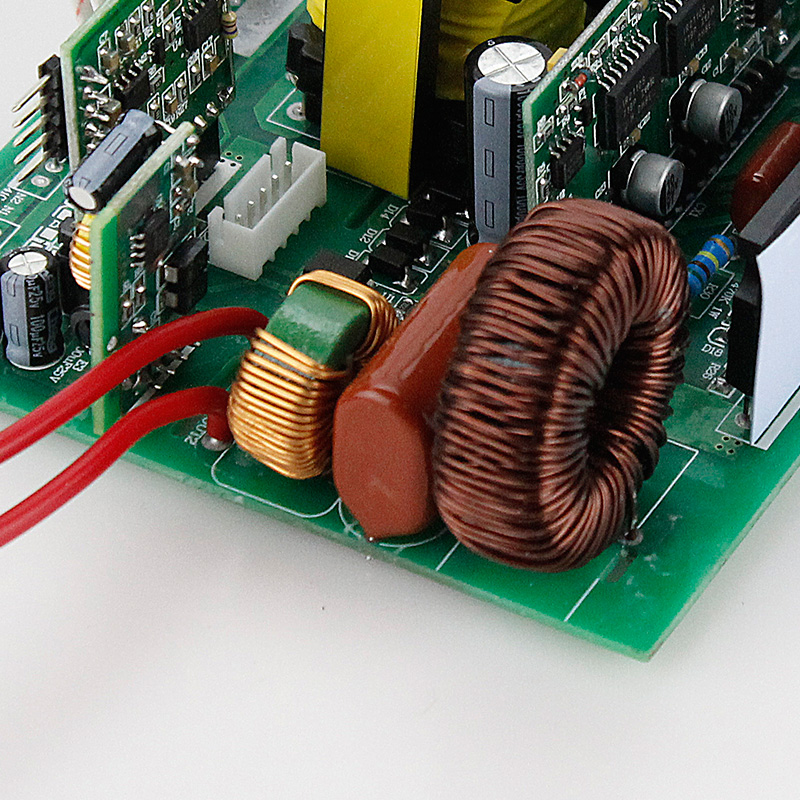
The global solar energy landscape is undergoing a profound transformation, and at the heart of this shift lies a critical yet often overlooked component: the solar inverter. In 2026, Chinese solar power inverters have emerged as the dominant force in the international market, reshaping supply chains, driving down costs, and accelerating the adoption of renewable energy worldwide. This article explores the latest developments, market dynamics, and technological innovations defining the rise of Chinese solar power inverters in the current year.
Market Dominance: A Statistical Overview
According to recent data from Wood Mackenzie, Chinese manufacturers now occupy six of the top ten positions in the global solar inverter rankings for 2026. Sungrow and Huawei continue to lead the pack, collectively accounting for nearly 35% of global shipments. This dominance is not merely a matter of volume; it reflects a comprehensive advantage in research and development, manufacturing scale, and global service networks.
The export figures tell an equally compelling story. In the first half of 2026, China’s inverter exports reached 5.53 billion, representing a 30% year-on-year increase. European markets remain the largest destination, absorbing 2.07 billion worth of inverters, followed by the Asia-Pacific region at $1.83 billion. Notably, emerging markets in Africa and the Middle East have shown explosive growth, with African imports surging by 48% compared to the previous year.
Technological Innovation: Beyond Price Competition
While cost-effectiveness initially drove the adoption of Chinese solar power inverters, technological innovation has become the primary differentiator in 2026. Leading manufacturers are investing heavily in next-generation technologies that address the evolving needs of modern power grids.
Sungrow’s recently launched PowerMatrix system represents a paradigm shift in inverter design. This matrix inverter integrates photovoltaic inversion, energy storage conversion, energy routing, and grid-forming control into a single unit, enabling unprecedented coordination between generation, storage, and consumption. The system has demonstrated the ability to reduce balance-of-system costs by over 10% while improving levelized cost of energy by more than 2%.
Huawei’s digital energy solutions have similarly pushed boundaries. The company’s FusionSolar 9.0 platform achieved the world’s first grid-forming photovoltaic-storage application, while its intelligent operation and maintenance systems have reduced fault response times from the industry average of 48 hours to just 4 hours. This digital advantage has helped Huawei capture over 30% of the European distributed market.
Navigating Trade Barriers and Policy Changes
The rise of Chinese solar power inverters has not been without challenges. In April 2026, China implemented a significant policy change by eliminating the 9% value-added tax export rebate for photovoltaic products, including inverters. This move, designed to curb destructive price competition and reduce the risk of anti-subsidy investigations from Western nations, has forced manufacturers to recalibrate their pricing strategies.
Simultaneously, trade barriers in key markets have intensified. The European Union’s Net-Zero Industry Act requires that 30% of photovoltaic components in public tenders come from non-Chinese sources starting in 2026, with this figure rising to 40% by 2030. France has gone further, banning Chinese inverters from public-funded projects entirely.
In response, leading Chinese manufacturers are accelerating their overseas production strategies. Sungrow has established manufacturing facilities in Poland and Thailand, while other companies are exploring opportunities in the Middle East and Africa. This localization approach not only helps navigate trade restrictions but also strengthens supply chain resilience.
Regional Market Dynamics
The global demand for Chinese solar power inverters varies significantly by region, reflecting diverse policy environments and energy needs.
Europe remains the largest market, driven by energy security concerns following geopolitical tensions and rising natural gas prices. Household energy storage demand has grown by 38% year-on-year, with countries like Germany, Italy, and Poland leading adoption. Australian demand has been particularly remarkable, with exports to Oceania increasing by 199% in the first half of 2026, fueled by the expansion of the household battery subsidy program from 2.3 billion to 7.2 billion Australian dollars.
Africa represents the fastest-growing market, with imports increasing by 48% year-on-year. Nigeria and South Africa are the primary destinations, as rising diesel prices and the removal of fuel subsidies have accelerated the transition to solar-plus-storage solutions. The Middle East is also experiencing a structural boom, with sovereign-level projects in Saudi Arabia and the UAE driving demand for large-scale storage-capable inverters.
The Road Ahead: Opportunities and Challenges
As we look toward the remainder of 2026 and beyond, several trends will shape the future of Chinese solar power inverters. First, the integration of artificial intelligence and machine learning into inverter operations will enable predictive maintenance and optimized energy dispatch, further enhancing system efficiency.
Second, the growing emphasis on grid-forming capabilities will become increasingly important as renewable energy penetration rises. Inverters that can provide stability services traditionally offered by conventional power plants will command premium pricing.
Finally, the industry must navigate the delicate balance between maintaining competitive pricing and ensuring sustainable profit margins. The elimination of export rebates and rising raw material costs, particularly for copper and IGBT modules, have put pressure on manufacturers to innovate rather than simply compete on price.
Conclusion
The story of Chinese solar power inverters in 2026 is one of remarkable achievement and ongoing evolution. From dominating global market share to pioneering technological innovations, Chinese manufacturers have established themselves as indispensable players in the global energy transition. While trade barriers and policy changes present challenges, the industry’s response—through technological advancement, overseas localization, and strategic market diversification—demonstrates resilience and adaptability.
As the world continues its shift toward renewable energy, the role of high-quality, efficient, and intelligent inverters will only grow in importance. Chinese manufacturers, with their combination of scale, innovation, and global reach, are well-positioned to remain at the forefront of this critical industry for years to come.
