Address
304 North Cardinal
St. Dorchester Center, MA 02124
Work Hours
Monday to Friday: 7AM - 7PM
Weekend: 10AM - 5PM
Address
304 North Cardinal
St. Dorchester Center, MA 02124
Work Hours
Monday to Friday: 7AM - 7PM
Weekend: 10AM - 5PM

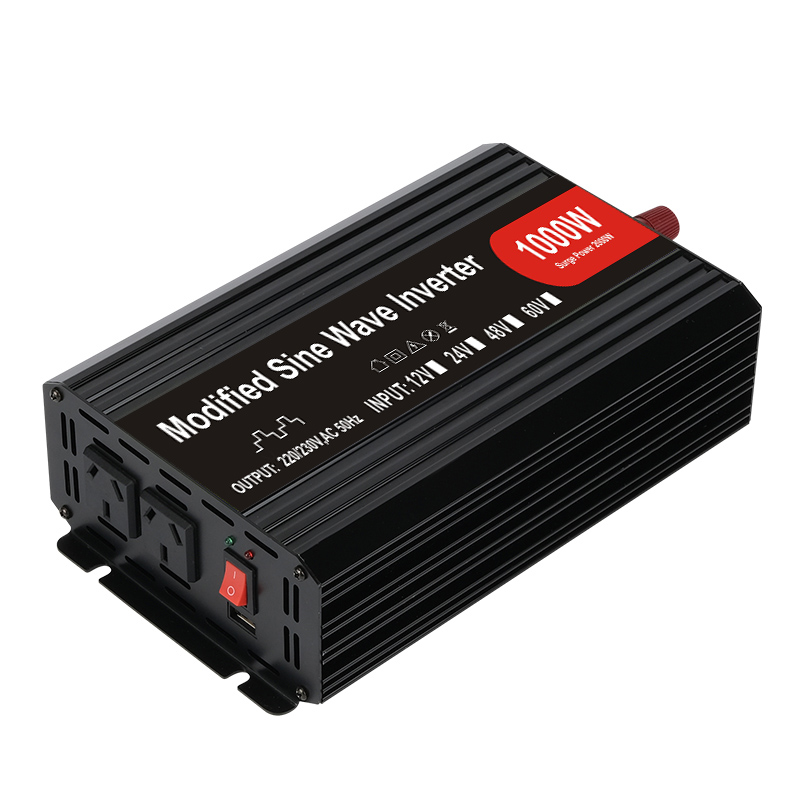
Understanding the Modified Sine Wave Inverter: A Practical Power Solution for Everyday Use
In the world of portable power, off-grid energy, and vehicle-based electricity systems, the modified sine wave inverter remains one of the most widely used power conversion devices. It converts direct current from batteries, solar panels, or vehicle electrical systems into alternating current that can power household appliances, tools, and electronic devices. Although it does not produce the same smooth waveform as a pure sine wave inverter, a modified sine wave inverter is still highly valued for its affordability, simplicity, and ability to support many common loads.
A modified sine wave inverter generates an output waveform that looks like a stepped or block-shaped approximation of a sine wave. Instead of rising and falling smoothly, the voltage changes in stages, creating a pattern that sits between a square wave and a true sine wave. This waveform is usually produced through pulse-width modulation or simple阶梯-wave control circuits. Because its internal circuitry is less complex, a modified sine wave inverter typically costs less than a pure sine wave inverter, making it attractive for budget-conscious buyers and mass-market applications.
The performance of a modified sine wave inverter depends heavily on the type of load it powers. For resistive loads such as incandescent lamps, electric heaters, kettles, and basic heating elements, it usually works well. Many switch-mode power supplies, such as those found in laptops, phone chargers, and small televisions, can also operate on a modified sine wave inverter, although there may be slight efficiency loss or audible noise. In automotive and outdoor scenarios, a modified sine wave inverter is often used to power mobile phones, cameras, small fans, lights, and entertainment devices during travel, camping, or emergency situations.
However, a modified sine wave inverter is not suitable for all appliances. Its total harmonic distortion is relatively high, often ranging from about 20% to 45%, which means the output power contains more electrical noise than grid electricity or pure sine wave power. This can cause problems for sensitive electronics, audio equipment, communication devices, and certain medical instruments. Motors, compressors, refrigerators, air conditioners, power tools with variable-speed control, and devices with electronic ballasts may run hotter, noisier, or less efficiently when powered by a modified sine wave inverter. In some cases, long-term use may even shorten equipment life.
When comparing a modified sine wave inverter with a pure sine wave inverter, the main difference lies in waveform quality and device compatibility. A pure sine wave inverter produces clean, smooth power that closely resembles utility electricity, so it can safely run almost any appliance. A modified sine wave inverter, on the other hand, is a more economical option that works best with simple or non-sensitive loads. For users who only need to power lights, small electronics, chargers, or basic heating devices, a modified sine wave inverter can be a practical and cost-effective choice. For users who rely on motors, medical equipment, high-end audio systems, or precision electronics, a pure sine wave inverter is generally the safer option.
Efficiency is another important consideration. Many manufacturers claim that a modified sine wave inverter can reach conversion efficiencies around 90% to 95% under ideal resistive loads. However, when driving inductive or capacitive loads, actual efficiency may drop because the distorted waveform causes additional heat and energy loss. This means that while the device may appear efficient on paper, real-world performance depends on what is connected to it.
For international buyers, distributors, and cross-border e-commerce sellers, the modified sine wave inverter remains an important product category. It is commonly found in car inverters, portable power stations, solar backup systems, and entry-level off-grid kits. Its lower manufacturing cost allows it to serve price-sensitive markets, especially where users need temporary or basic AC power. At the same time, clear product descriptions and load compatibility guidance are essential. Customers should be informed that a modified sine wave inverter is not recommended for refrigerators, air conditioners, medical devices, laser printers, sensitive audio gear, or appliances with large startup currents.
In summary, the modified sine wave inverter occupies a unique position in the power inverter market. It is not the most advanced waveform technology, but it is far more capable than a simple square wave inverter. For many everyday applications, it offers a reasonable balance between cost, size, and functionality. When used with compatible devices, a modified sine wave inverter can provide reliable backup power for travel, outdoor work, emergency preparedness, and small off-grid systems. The key to getting the best results is matching the inverter to the right loads and understanding its limitations before connecting sensitive or motor-driven equipment.
