Address
304 North Cardinal
St. Dorchester Center, MA 02124
Work Hours
Monday to Friday: 7AM - 7PM
Weekend: 10AM - 5PM
Address
304 North Cardinal
St. Dorchester Center, MA 02124
Work Hours
Monday to Friday: 7AM - 7PM
Weekend: 10AM - 5PM
Solar Power Inverter Applications in South America: Driving the Clean Energy Transition
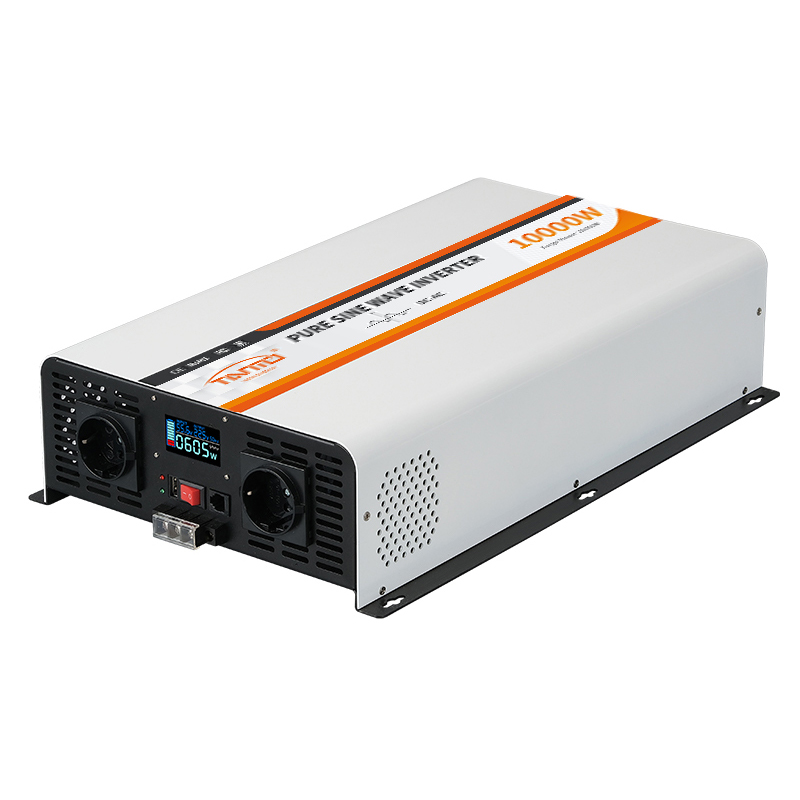
South America is becoming one of the most dynamic regions for solar energy development. With abundant sunshine, rising electricity costs, and growing demand for reliable power, solar photovoltaic systems are expanding rapidly across Brazil, Chile, Colombia, Argentina, Peru, and other countries. At the heart of every solar power inverter system lies a critical device: the solar power inverter. It converts the direct current generated by solar panels into usable alternating current for homes, businesses, industrial facilities, and the power grid.
Residential and Distributed Solar Applications
Residential rooftop solar has become one of the fastest-growing application scenarios in South America, especially in Brazil. Many households face relatively high retail electricity prices, which makes rooftop solar an attractive way to reduce long-term energy costs. In this market, the solar power inverter plays a central role because it determines how efficiently solar energy is converted, how safely the system operates, and how easily users can monitor their power generation.
Single-phase and hybrid inverters are widely used in homes. Hybrid models are particularly valuable because they can work together with batteries, allowing households to store excess solar energy for use during the evening or during grid outages. In regions where power supply is unstable, a reliable solar power inverter helps improve energy independence and reduces dependence on diesel generators or expensive grid electricity.
Microinverters are also gaining attention in the distributed solar market. Unlike traditional string inverters, microinverters operate at the module level, which can improve energy yield when rooftops have shading or different orientations. For South American homes with complex roof structures, this technology offers a practical solution.
Commercial and Industrial Solar Applications
Commercial and industrial users in South America are increasingly adopting solar energy to lower operating costs and meet sustainability goals. Supermarkets, factories, warehouses, schools, hospitals, and agricultural processing facilities can all benefit from rooftop or ground-mounted solar systems.
In this segment, three-phase string inverters are commonly used. They are suitable for medium-sized systems and can support higher power loads such as air conditioning, refrigeration, production lines, and electric vehicle charging. A well-designed solar power inverter for commercial use should offer high conversion efficiency, multiple MPPT inputs, remote monitoring, and strong protection against overvoltage, lightning, and high temperatures.
Brazil’s distributed generation market has shown strong demand for commercial inverters, especially those compatible with local three-phase 220V grids. Similar needs are emerging in Chile, Colombia, and Argentina, where businesses are looking for solutions that reduce electricity bills while maintaining stable operations.
Utility-Scale Solar Power Plants
Utility-scale solar projects represent another major application area. Large solar farms in South America require high-power central or modular inverters that can handle megawatt-level capacity. These projects are often connected directly to the national grid, so the performance of the solar power inverter affects not only energy yield but also grid stability.
Chile’s Atacama Desert, for example, has some of the highest solar irradiation levels in the world, making it highly suitable for large photovoltaic plants. Brazil has also continued to expand both distributed and centralized solar capacity, with many new projects focusing on grid integration, energy storage, and long-term power purchase agreements. In such projects, inverters must support advanced functions such as reactive power control, low-voltage ride-through, remote diagnostics, and compatibility with battery energy storage systems.
Off-Grid and Rural Energy Solutions
Off-grid applications remain important in parts of South America where grid access is limited or unreliable. Rural communities, farms, mining camps, telecom stations, and remote tourism facilities often rely on standalone solar systems.
In these environments, off-grid inverters and hybrid inverters are essential. They can operate without a public grid and work together with batteries to provide continuous power. For agricultural applications, solar pumping systems are also widely used. A solar power inverter designed for off-grid or pumping applications must be able to handle variable sunlight, high ambient temperatures, and long operating hours.
These solutions help reduce diesel consumption, lower maintenance costs, and improve energy access in remote areas. They are especially valuable in regions where extending transmission lines would be technically difficult or economically unfeasible.
Key Requirements for Solar Power Inverters in South America
South America presents diverse climate and grid conditions, so inverter selection must consider local realities. In tropical and coastal areas, high temperature, high humidity, and salt mist can affect equipment lifespan. In mountainous regions, high altitude may reduce cooling efficiency. In some countries, grid voltage and frequency standards also vary.
A suitable solar power inverter for the South American market should therefore offer strong environmental adaptability, reliable safety protection, efficient energy conversion, and intelligent monitoring capabilities. Products with IP65 or IP66 protection, wide operating temperature ranges, AFCI arc-fault detection, surge protection, and remote management functions are particularly competitive.
Market Outlook
The South American solar market is moving from simple capacity expansion toward more integrated solutions. Solar-plus-storage, hybrid inverters, microgrids, and grid-support technologies are becoming increasingly important. Governments, utilities, businesses, and households are all seeking cleaner, more stable, and more cost-effective energy options.
As solar adoption grows, the solar power inverter will continue to be a core component of the region’s energy transformation. Whether for rooftop homes, commercial buildings, large power plants, or off-grid communities, high-quality inverter solutions can help South America make better use of its solar resources and build a more resilient clean energy future.
