Address
304 North Cardinal
St. Dorchester Center, MA 02124
Work Hours
Monday to Friday: 7AM - 7PM
Weekend: 10AM - 5PM
Address
304 North Cardinal
St. Dorchester Center, MA 02124
Work Hours
Monday to Friday: 7AM - 7PM
Weekend: 10AM - 5PM
Solar Power Inverter in Africa: Practical Applications from Households to Commercial and Industrial Projects
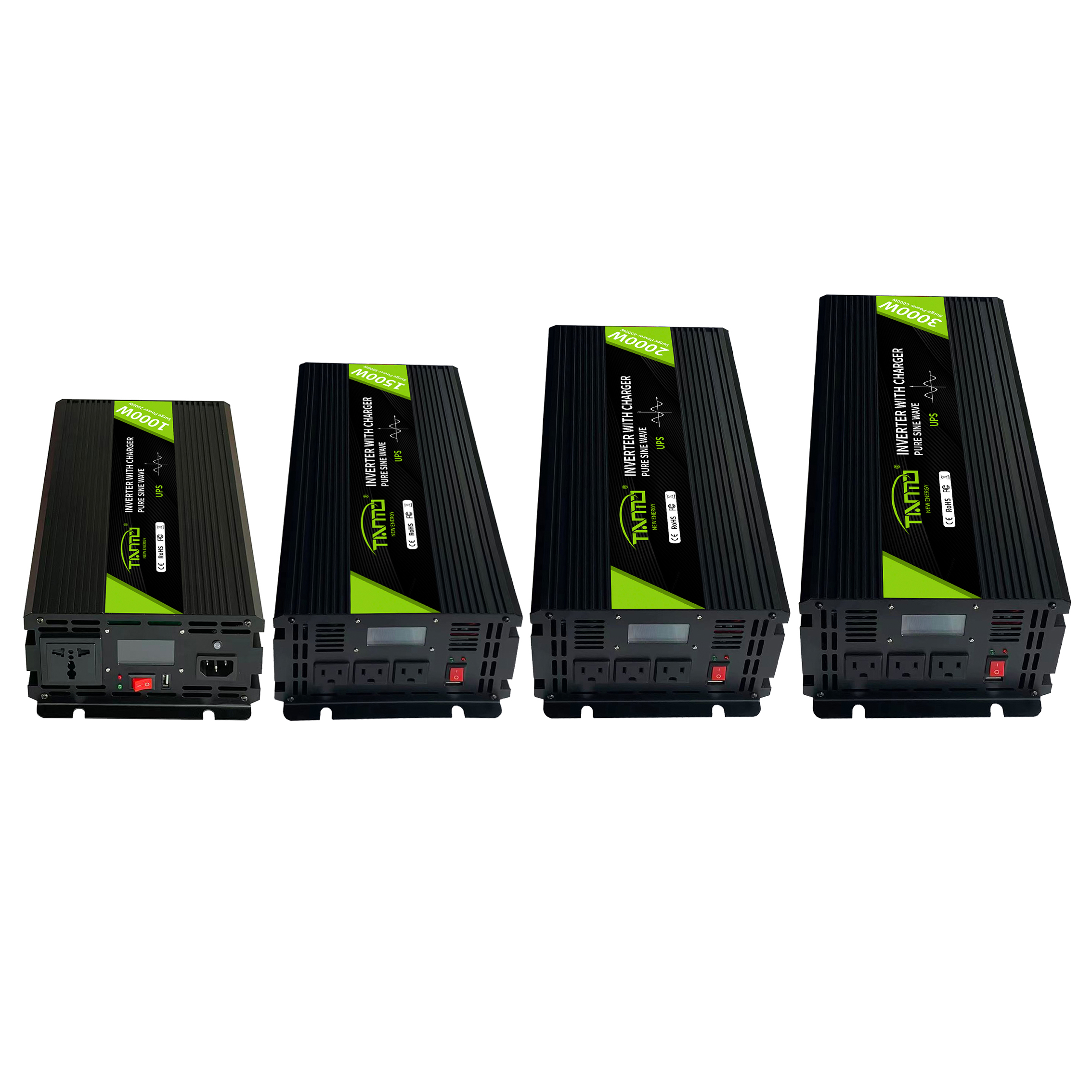
Africa’s electricity landscape is changing rapidly. Grid coverage remains uneven, power outages are frequent in many countries, and diesel generators have long been a common backup solution. In this context, the solar power inverter has become a central device in distributed energy systems. It converts direct current from solar panels and batteries into usable alternating current, enabling households, shops, clinics, farms and factories to operate with more reliable and predictable power. A well-selected solar power inverter is no longer just an electronic component; it is the control hub of a modern off-grid or hybrid energy system.
In rural and remote communities, off-grid solar home systems depend heavily on inverter performance. Many villages in sub-Saharan Africa are far from the main transmission network, so extending the grid is often expensive and slow. Small solar kits with an integrated solar power inverter can provide basic lighting, phone charging, television, fans and other household loads. In São Tomé and Príncipe, for example, Chinese-assisted household solar systems have helped coastal villages gain stable electricity for the first time, reducing dependence on noisy and costly diesel generators. For such applications, the solar power inverter must be simple to install, compatible with local battery types and able to operate reliably under high ambient temperatures.
Nigeria represents another important application scenario. The country has a large population, rapid urbanisation and persistent grid instability, which has driven strong demand for residential and commercial solar storage solutions. Many Nigerian households now combine solar panels, lithium batteries and a hybrid solar power inverter to reduce diesel consumption and maintain power during blackouts. Hybrid inverters are particularly valuable because they can manage solar input, battery charging, grid connection and generator backup within one system. This flexibility allows users to prioritise self-consumption, extend battery life and keep critical appliances running when the grid fails.
In South Africa, load shedding has similarly accelerated adoption of inverter-based systems. Residential users install hybrid inverters together with battery storage to protect refrigerators, security systems, lighting and home offices. Commercial and industrial customers use larger inverters to support workshops, retail centres, farms and manufacturing facilities. In these settings, the solar power inverter must handle higher loads, motor starting currents and frequent switching between grid, solar and battery modes. Three-phase hybrid inverters are increasingly common in commercial installations because they provide better load balancing and higher power capacity.
East Africa also shows strong practical demand. In Kenya, off-grid solar products have expanded through both retail sales and pay-as-you-go models, allowing customers with limited upfront capital to access solar electricity gradually. A solar power inverter in these systems must support remote monitoring, safe battery management and stable operation under variable load conditions. For small shops, barber shops, phone-charging kiosks and rural clinics, even a modest inverter system can extend business hours, improve service quality and reduce operating costs.
Agriculture is another growing field for inverter applications. Solar water pumps, grain mills, cold rooms and irrigation systems can all benefit from solar power when paired with a suitable solar power inverter and battery bank. For smallholder farmers, replacing diesel pumps with solar-powered equipment can lower fuel costs and improve irrigation reliability. The inverter’s role here is not only power conversion but also load protection, because pumps and compressors often require stable voltage and sufficient surge capacity during start-up.
From a product and export perspective, African market requirements differ from those in Europe or North America. Customers in many African countries value durability, heat resistance, dust protection, wide battery compatibility and clear after-sales support. A solar power inverter designed for Africa should be able to operate at high temperatures, tolerate weak or unstable grid conditions and switch quickly between power sources. Local installation habits also matter, because some systems integrate existing generators, lead-acid batteries or mixed solar panels. Therefore, technical documentation, wiring guidance and local distributor training are as important as the hardware itself.
Looking ahead, the African solar power inverter market will continue to grow across households, small businesses, telecom sites, schools, hospitals and industrial parks. Off-grid solar is increasingly seen not as a temporary substitute but as long-term energy infrastructure. As battery costs fall, hybrid systems become more affordable and digital energy management becomes more common. For manufacturers and exporters, success in Africa will depend on matching the right inverter type to local grid conditions, climate, load profiles and service networks. In practice, the most competitive solar power inverter is not always the most complex one, but the one that can deliver stable power, easy maintenance and real cost savings in African operating environments.