Address
304 North Cardinal
St. Dorchester Center, MA 02124
Work Hours
Monday to Friday: 7AM - 7PM
Weekend: 10AM - 5PM
Address
304 North Cardinal
St. Dorchester Center, MA 02124
Work Hours
Monday to Friday: 7AM - 7PM
Weekend: 10AM - 5PM


Off-grid power inverters rely on stable battery connections and compatible energy storage solutions to deliver reliable power conversion. Proper battery connection, correct type matching, and adherence to safety protocols are critical to system performance, longevity, and user safety. This guide details the step-by-step connection process, optimal battery types, and essential precautions for off-grid inverter systems.
Step-by-Step Battery Connection Process
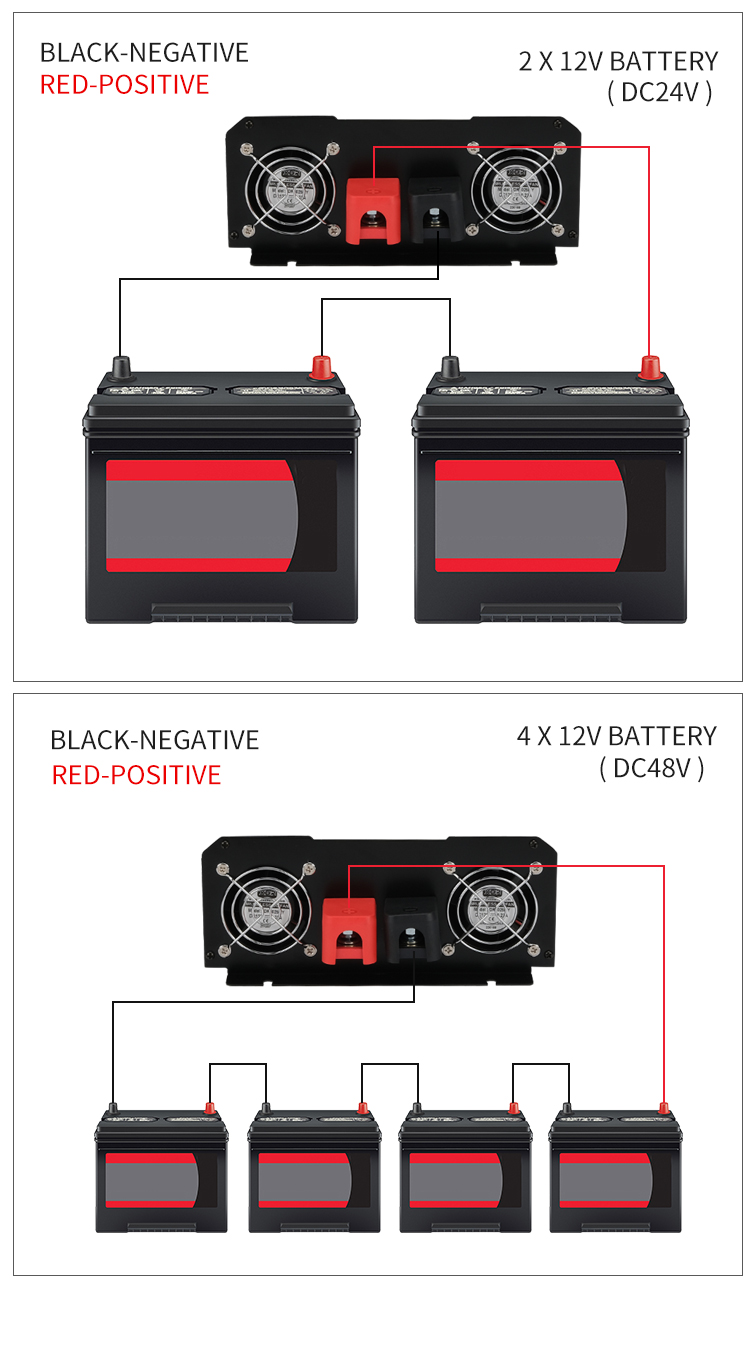
1. Pre-Connection Preparation: Ensure the power inverter is switched off (set to “OFF”) and all loads are disconnected to prevent short circuits. Verify that the battery voltage (12V, 24V, etc.) matches the inverter’s DC input voltage—never connect a mismatched voltage source. Remove any metal objects from hands and work areas to avoid accidental battery short-circuiting, which can cause burns or equipment damage.
2. Cable Selection and Handling: Use copper core cables with sufficient cross-sectional area (minimum 6mm² for standard setups) to minimize voltage drop and heat generation. Keep cable lengths as short as possible while maintaining safe installation distances. Strip cable ends cleanly to ensure secure contact, avoiding frayed wires that could cause arcing.
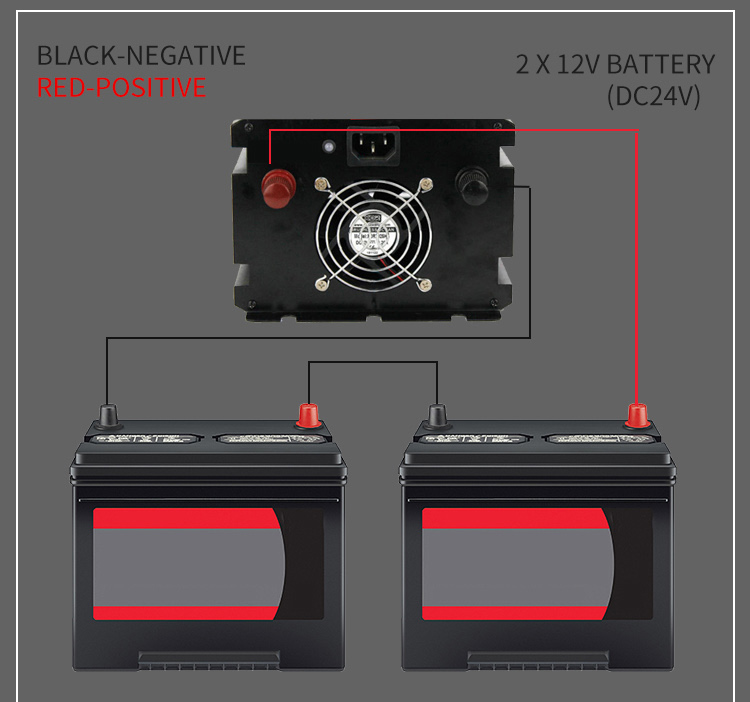
3. Polarity Connection: Identify positive (+) and negative (-) terminals on both the battery and inverter—typically marked in red (positive) and black (negative). Connect the positive battery terminal to the inverter’s positive input, and the negative terminal to the inverter’s negative input (red-to-red, black-to-black). Even with anti-reverse protection in modern inverters, reverse polarity can blow fuses or damage internal components, so double-check connections before powering on.
4. Post-Connection Verification: After securing connections (tighten terminals to prevent loose contacts), remove any battery covers or insulation. Switch on the inverter—most models will display the battery voltage on the LCD screen to confirm a successful connection. Test the system with a small load to ensure stable operation before connecting full-power devices.
Optimal Battery Types for Off-Grid Inverters
1. Lithium Iron Phosphate (LiFePO₄) Batteries: The most recommended option for off-grid systems, offering 3000+ charge-discharge cycles, high safety (low thermal runaway risk), and excellent temperature adaptability. They feature low self-discharge rates (<1% per month) and compact dimensions, making them ideal for long-term, low-maintenance setups like remote cabins or solar energy storage systems. Compatible with all pure sine wave inverters, they excel in both residential and commercial applications.
2. Gel Batteries: A cost-effective upgrade from traditional lead-acid batteries, with gel-like electrolytes that prevent leakage. They offer good deep-cycle performance and wide temperature tolerance, suitable for moderate-use scenarios like RVs or emergency backup systems. While more durable than standard lead-acid batteries, they require proper charging regulation to avoid overcharging damage.
3. Ternary Lithium Batteries: High-energy-density options for space-constrained applications (e.g., portable power stations or off-grid vehicles). Their lightweight design and strong low-temperature performance make them suitable for mobile setups, but they require advanced Battery Management Systems (BMS) to mitigate safety risks. Not recommended for unmonitored long-term use due to higher thermal sensitivity.
4. Lead-Carbon Batteries: Improved lead-acid variants with added carbon to reduce sulfation and extend lifespan. They offer cost advantages and compatibility with older inverter models, making them a practical choice for budget-conscious users or retrofits. However, they are heavier and have shorter lifespans compared to lithium alternatives.
Critical Safety and Operational Precautions
1. Voltage and Power Matching: Ensure the inverter’s rated input voltage matches the battery bank (e.g., 24V inverter with 24V battery pack). The inverter’s output power must exceed the total load power, with extra margin for high-startup devices (e.g., refrigerators or air conditioners) to avoid overload protection triggers.
2. Environmental Requirements: Install the inverter and battery in a dry, well-ventilated area with a minimum 20cm clearance from surrounding objects. Operate within the temperature range of 0℃ to 40℃ to prevent overheating or performance degradation. Keep components away from flammable materials and protect them from rain or moisture.
3. Charge-Discharge Protection: Never charge and invert simultaneously—avoid plugging chargers into the inverter’s AC output. Most inverters feature built-in protection against overvoltage, undervoltage, and short circuits, but monitor battery levels regularly to prevent deep discharge (below 10.4V for 12V systems), which can permanently damage batteries.
4. Maintenance and Troubleshooting: Clean inverter surfaces with dry or anti-static cloths—never use water or chemical cleaners. If the inverter displays error codes (e.g., overheat, overload), disconnect power, reduce loads, and allow components to cool before restarting. Do not open the inverter chassis; contact qualified technicians for repairs.
By following proper connection procedures, selecting compatible batteries, and adhering to safety guidelines, off-grid inverter systems can deliver reliable, efficient power while minimizing risks and extending component lifespans.