Address
304 North Cardinal
St. Dorchester Center, MA 02124
Work Hours
Monday to Friday: 7AM - 7PM
Weekend: 10AM - 5PM
Address
304 North Cardinal
St. Dorchester Center, MA 02124
Work Hours
Monday to Friday: 7AM - 7PM
Weekend: 10AM - 5PM


The Evolution and Importance of a Power Inverter for Truck Applications
The modern trucking industry is undergoing a massive transformation, not just in how vehicles are powered, but in how power is utilized within the cabin. For decades, long-haul truck drivers relied on idling their engines to power basic amenities or run aftermarket devices. Today, the power inverter for truck applications has become an indispensable component of the modern commercial vehicle, serving as the vital link between the vehicle’s electrical system and the driver’s essential equipment. Whether it is running a microwave, charging laptops, or powering a small refrigerator, a reliable power inverter for truck use ensures that drivers can maintain a comfortable and productive lifestyle on the road without compromising their vehicle’s electrical integrity.
When selecting the right equipment for a heavy-duty vehicle, understanding the technical differences is paramount. Unlike standard passenger cars that typically operate on a 12-volt system, most commercial trucks utilize a 24-volt electrical architecture. Consequently, a standard automotive inverter will not suffice; operators must specifically source a power inverter for truck systems that is engineered to handle 24V DC input. Furthermore, the output waveform is a critical factor. While cheaper modified sine wave inverters exist, professional truck drivers are strongly advised to invest in a pure sine wave power inverter for truck environments. This is because pure sine wave output mimics household utility power, ensuring that sensitive electronics, such as medical devices, high-end laptops, and variable-speed motors in refrigerators, operate efficiently without generating excess heat or experiencing premature failure.
The power requirements for commercial drivers vary significantly based on their specific needs. For a driver who primarily needs to charge a cell phone, run a CPAP machine, or power a laptop, a 1000W to 2000W unit is generally sufficient. For instance, high-quality models designed for this segment can provide a continuous 2000W output with peak surges up to 4000W, easily handling the startup draw of small appliances. However, for truckers who require more extensive off-grid capabilities, such as cooking with an induction cooktop or running multiple high-draw devices simultaneously, larger capacity units are necessary. In these scenarios, selecting a power inverter for truck applications with a 3000W or higher continuous rating is recommended to prevent overloading and to ensure seamless operation of heavy-duty kitchen appliances.
Safety and protection mechanisms are non-negotiable in commercial vehicle electrical systems. A premium power inverter for truck use must be equipped with comprehensive protection features to safeguard both the inverter and the vehicle’s expensive battery bank. Essential safety protocols include over-voltage protection, under-voltage shutdown, over-temperature shutdown, and short-circuit protection. For example, if the truck’s battery voltage drops below a safe threshold (e.g., 21V for a 24V system), a high-quality inverter will automatically alarm and shut down. This critical feature prevents deep discharging, which can permanently damage heavy-duty truck batteries and leave the driver stranded with a vehicle that cannot start. Additionally, robust thermal management, such as intelligent temperature-controlled cooling fans and aluminum alloy housings, ensures that the power inverter for truck installations can withstand the demanding temperature fluctuations and continuous high-load operations typical in long-haul trucking.
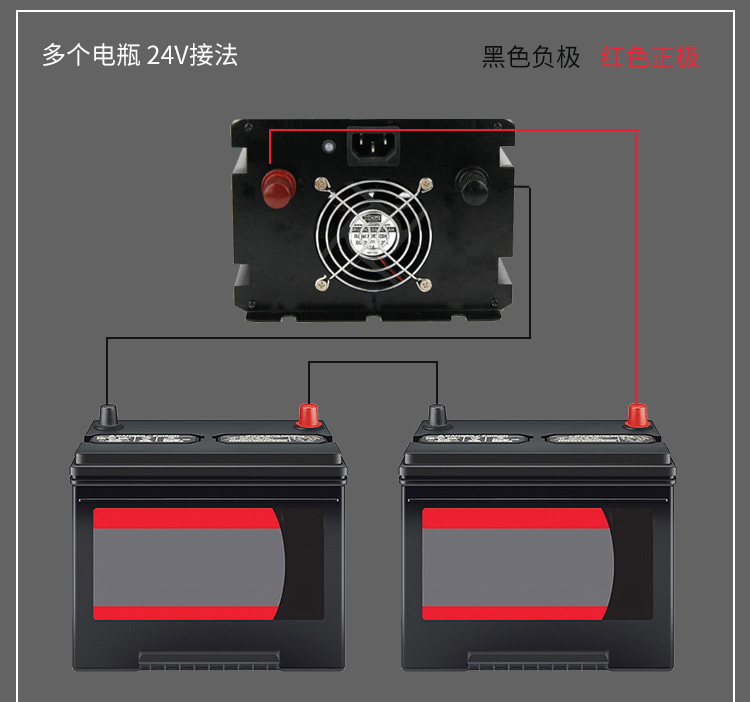
Installation and wiring also play a significant role in the performance and safety of these systems. Due to the high currents involved, especially in 12V or 24V systems, a high-capacity power inverter for truck should never be connected via a cigarette lighter socket. The lighter socket is typically fused at 10A to 15A, limiting its capacity to around 150W-200W. Any inverter rated above this threshold must be hardwired directly to the truck’s battery bank using appropriately sized copper cables and an inline fuse. This direct connection minimizes voltage drop, reduces the risk of electrical fires, and ensures that the inverter receives the stable voltage required for optimal efficiency. Professional installation is highly recommended to ensure that all connections are secure, properly insulated, and routed away from hot or moving engine components.
Looking toward the future, the trucking industry’s shift toward electrification and higher voltage architectures will further influence inverter technology. As electric trucks and hybrid commercial vehicles become more prevalent, the integration of high-voltage DC-to-AC conversion will become even more seamless. Manufacturers are already developing automotive-grade gate drivers and power supply ICs designed specifically for 800V architectures, which will eventually trickle down to the auxiliary power systems in commercial trucks. Until then, the traditional 24V power inverter for truck applications remains the industry standard, evolving continuously to meet the growing demand for mobile power.
In conclusion, the power inverter for truck is far more than a simple accessory; it is a critical piece of equipment that directly impacts driver safety, health, and job satisfaction. By understanding the importance of voltage compatibility, pure sine wave technology, adequate power sizing, and robust safety protections, fleet managers and owner-operators can make informed purchasing decisions. Investing in a high-quality power inverter for truck use not only enhances the driver’s quality of life but also protects the vehicle’s electrical infrastructure, ultimately contributing to a more efficient and modern trucking industry.
