Address
304 North Cardinal
St. Dorchester Center, MA 02124
Work Hours
Monday to Friday: 7AM - 7PM
Weekend: 10AM - 5PM
Address
304 North Cardinal
St. Dorchester Center, MA 02124
Work Hours
Monday to Friday: 7AM - 7PM
Weekend: 10AM - 5PM
How to Choose the Right Power Inverter for Your Needs
In today’s world, where portable power and energy independence are becoming increasingly important, a power inverter has become an essential device for many. Whether for outdoor adventures, home emergency backup, or off-grid living, understanding how to select the right power inverter is crucial for ensuring your electronic devices operate safely and efficiently. This guide will walk you through the key factors to consider, empowering you to make an informed decision.
Understand the Basics: What is a Power Inverter?
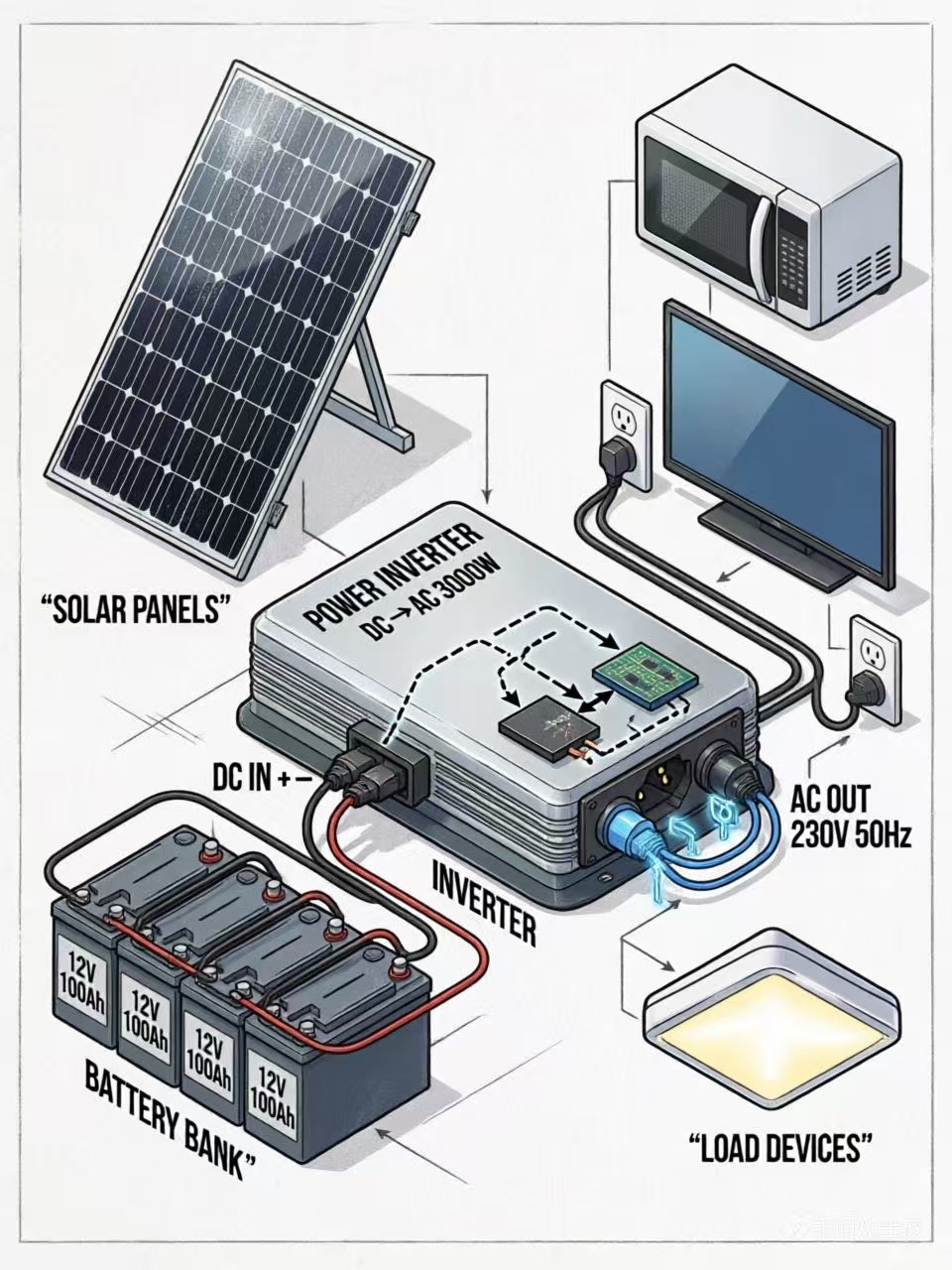
At its core, a power inverter is an electronic device that converts direct current (DC) electricity into alternating current (AC) electricity. Common DC sources include car batteries, deep-cycle batteries, or solar panels, while AC is the standard form of electricity used by most household appliances and electronics. Essentially, a power inverter acts as a bridge, allowing you to use your standard devices in locations without access to a traditional wall outlet.
Determine Your Power Requirements
The most critical step in choosing a power inverter is accurately calculating your power needs. This involves two key metrics: continuous power and surge (or peak) power.
Tip: Always choose a power inverter with a continuous power rating that is at least 20-25% higher than your total calculated load. This provides a safety margin, prevents the inverter from running at maximum capacity continuously, and allows for future additions.
Choose the Right Output Waveform
The quality of the AC electricity produced by a power inverter is defined by its output waveform. There are two main types available on the market:
Recommendation: For maximum compatibility and safety, especially if you plan to power a variety of electronics, investing in a pure sine wave power inverter is highly recommended.
Consider Efficiency and Protection Features
The efficiency of a power inverter refers to how effectively it converts DC power to AC power. It is expressed as a percentage. For example, an inverter with 90% efficiency will lose 10% of the battery’s power as heat during the conversion process. Higher efficiency means less energy waste, longer battery life, and less heat generation. Look for a power inverter with an efficiency rating of 85% or higher.
Equally important are the built-in protection features. A reliable power inverter should have a comprehensive suite of safety mechanisms to protect both itself and your connected devices. Key protections to look for include:
Match the Input Voltage and Consider Installation
Your power inverter must have a DC input voltage that matches your power source, such as a 12V, 24V, or 48V battery bank. Using an incompatible voltage can damage the inverter and your equipment.
Finally, consider the installation environment. Power inverters generate heat, so they require adequate ventilation. They should be installed in a cool, dry, and well-ventilated location, away from flammable materials and direct sunlight. For high-power applications, professional installation is often advised to ensure correct wiring and safety.
In conclusion, selecting the right power inverter is a straightforward process when you focus on your specific power needs, understand the importance of a pure sine wave output, and prioritize efficiency and safety features. By carefully evaluating these factors, you can choose a power inverter that provides reliable, clean, and safe power for all your devices, whether you’re on the road, at a campsite, or securing your home against power outages.