Address
304 North Cardinal
St. Dorchester Center, MA 02124
Work Hours
Monday to Friday: 7AM - 7PM
Weekend: 10AM - 5PM
Address
304 North Cardinal
St. Dorchester Center, MA 02124
Work Hours
Monday to Friday: 7AM - 7PM
Weekend: 10AM - 5PM


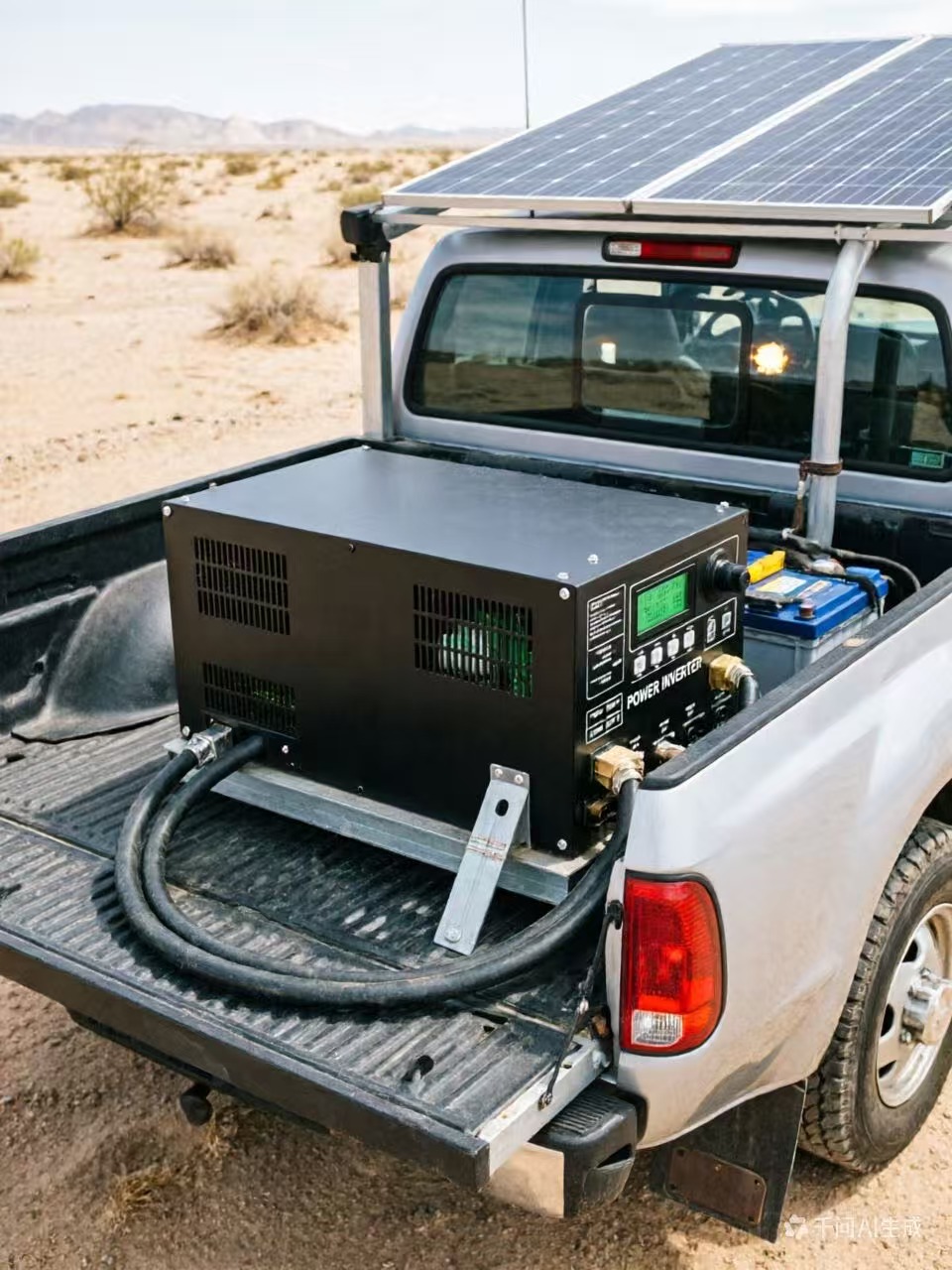
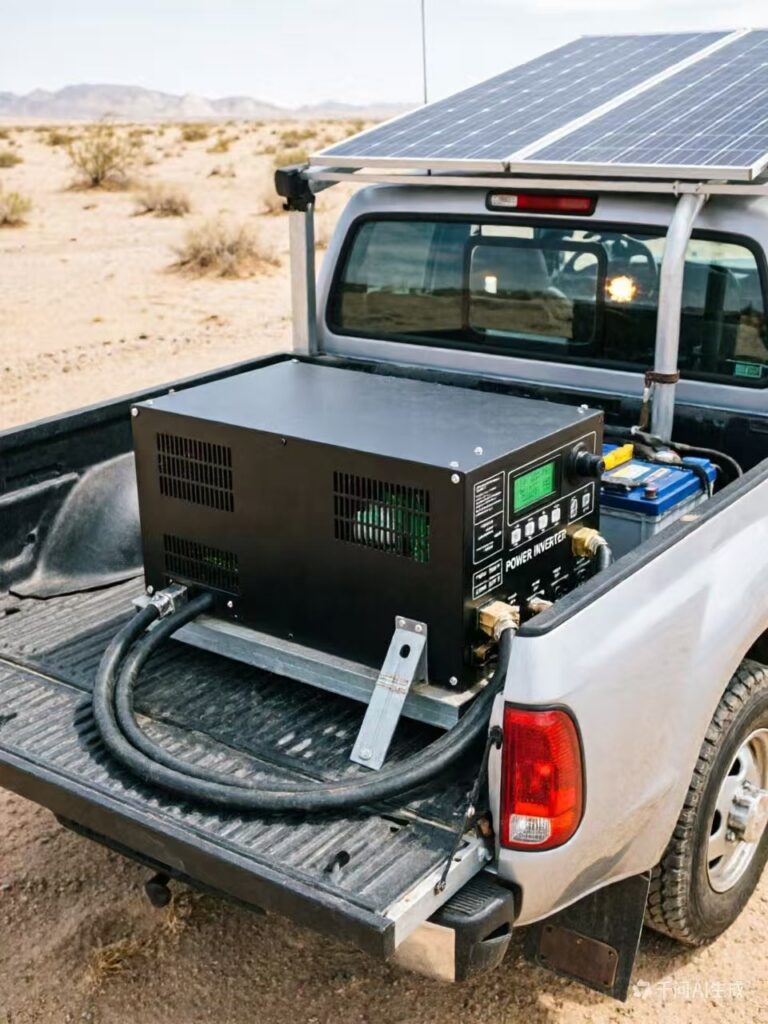
The Silent Conductor: Power Inverters for Truck and the Symphony of Electric Mobility
Beneath the sleek, aerodynamic exteriors of modern electric vehicles (EVs) lies a complex nervous system, a network of electronics that translates the driver’s intent into motion. While the lithium-ion battery pack is often celebrated as the heart of the EV, and the electric motor as the muscle, there exists a component that is arguably the most critical translator of energy: the power inverter. It is the device that stands between the stored direct current (DC) of the battery and the alternating current (AC) required by the motor. Without it, the vehicle would be immobilized, a silent sculpture of aluminum and carbon fiber. In the context of heavy-duty transport, specifically the rapidly evolving sector of electric trucks, the power inverter for truck applications represents a pinnacle of engineering, tasked with managing megawatts of power while ensuring efficiency, reliability, and precise control.
To understand the critical nature of the power inverter for truck, one must first grasp the fundamental physics of electric propulsion. Batteries, whether they are the high-density packs in a Tesla Semi or the robust units in a long-haul electric freight hauler, store energy as Direct Current (DC). This current flows in a single, steady direction from the negative terminal to the positive terminal. However, the electric motors that actually turn the wheels—particularly the AC Induction Motors or Permanent Magnet Synchronous Motors favored in the industry—require Alternating Current (AC) to function. AC is characterized by its oscillating nature, where the flow of electrons rapidly reverses direction, typically 50 to 60 times per second (measured in Hertz).
The power inverter for truck is the device that performs this alchemy. It takes the steady stream of DC voltage from the battery pack and converts it into a precise, high-frequency AC waveform. This is not a simple on-off switch; it is a high-speed switching operation, occurring thousands of times per second. Modern inverters utilize semiconductor switches, such as Insulated-Gate Bipolar Transistors (IGBTs) or the newer Silicon Carbide (SiC) MOSFETs. These switches turn on and off in a specific sequence, chopping the DC signal and reconstructing it into a sinusoidal AC wave. The quality and precision of this reconstructed wave are paramount. A “dirty” or jagged waveform can cause the motor to vibrate, overheat, and lose efficiency—three cardinal sins in the world of electric trucking where every kilowatt-hour determines range.
The role of the power inverter for truck extends far beyond mere conversion; it is the throttle, the governor, and the protector. When a truck driver depresses the accelerator pedal, they are not directly injecting power into the motor. Instead, they are sending a signal to the inverter. The inverter interprets this signal and adjusts the frequency and amplitude of the AC output. To accelerate, the inverter increases the frequency of the AC cycles, causing the motor to spin faster. To generate more torque—essential for a fully loaded truck starting on an incline—the inverter increases the amplitude (voltage) of the AC wave.
Furthermore, the inverter manages the phenomenon of regenerative braking. When the driver lifts off the throttle or applies the brakes, the electric motor transforms into a generator. The wheels spin the motor, which now produces AC electricity. The inverter captures this AC, converts it back into DC, and pumps it into the battery pack for storage. This bidirectional flow of energy is what gives electric trucks their efficiency advantage in stop-and-go traffic. The power inverter for truck must seamlessly switch between motoring and generating modes, often within milliseconds, to ensure smooth deceleration and optimal energy recapture.
The demands placed on a power inverter for truck are significantly more rigorous than those on a passenger car. A truck carries immense weight, requiring motors that produce thousands of Newton-meters of torque. This translates to enormous current demands—often exceeding 1,000 volts and several hundred amps. Managing this level of power generates substantial heat, the nemesis of all electronics.
Consequently, the design of a power inverter for truck is a masterclass in thermal management and ruggedization. These units are encased in heavy-duty, liquid-cooled housings. The coolant, usually a glycol-water mixture, circulates around the power electronics, whisking away heat to a dedicated radiator. The materials used within the inverter, such as the silicon wafers and the circuit boards, must be able to withstand constant mechanical vibration and shock without fracturing. A failure in the inverter of a passenger car is an inconvenience; a failure in a truck on a cross-country haul is a logistical catastrophe. Therefore, redundancy and fail-safe mechanisms are often built into the firmware and hardware of these industrial-grade inverters.
As the electric trucking industry evolves, the power inverter for truck is becoming smarter and more integrated. The latest generation of inverters utilizes Wide Bandgap semiconductors, such as Silicon Carbide (SiC). These materials can switch at higher frequencies and withstand higher temperatures than traditional silicon. This allows for smaller, lighter inverters with reduced energy losses. In the world of trucking, where weight is payload and efficiency is range, a 5% improvement in inverter efficiency can mean an extra 20 miles of travel on a single charge.
Moreover, the inverter is increasingly becoming a node in the vehicle’s broader network. It communicates with the Battery Management System (BMS) to monitor state of charge and temperature, and with the Vehicle Control Unit (VCU) to coordinate gear shifts (if applicable) and traction control. This level of integration ensures that the power inverter for truck does not just deliver power, but delivers it intelligently, optimizing the entire powertrain for the specific task at hand, whether it is climbing a mountain pass or cruising on a flat highway.
The power inverter for truck is the silent conductor of the electric revolution in freight. It is the invisible hand that shapes raw battery power into usable motion, managing the delicate balance between speed, torque, and efficiency. It is a component that must be robust enough to withstand the abuse of the open road yet precise enough to control the flow of electricity with nanosecond accuracy. As the world moves toward decarbonization, the power inverter for truck will continue to be a critical piece of infrastructure, not just under the hood, but in the very future of global logistics. It is the bridge between the static energy stored in a battery and the kinetic energy of a multi-ton vehicle moving down the highway, a testament to human ingenuity in the pursuit of cleaner, more efficient transport.