Address
304 North Cardinal
St. Dorchester Center, MA 02124
Work Hours
Monday to Friday: 7AM - 7PM
Weekend: 10AM - 5PM
Address
304 North Cardinal
St. Dorchester Center, MA 02124
Work Hours
Monday to Friday: 7AM - 7PM
Weekend: 10AM - 5PM
Pure Sine Wave Inverters in 2026: The Quiet Engine Behind Cleaner, Smarter Power
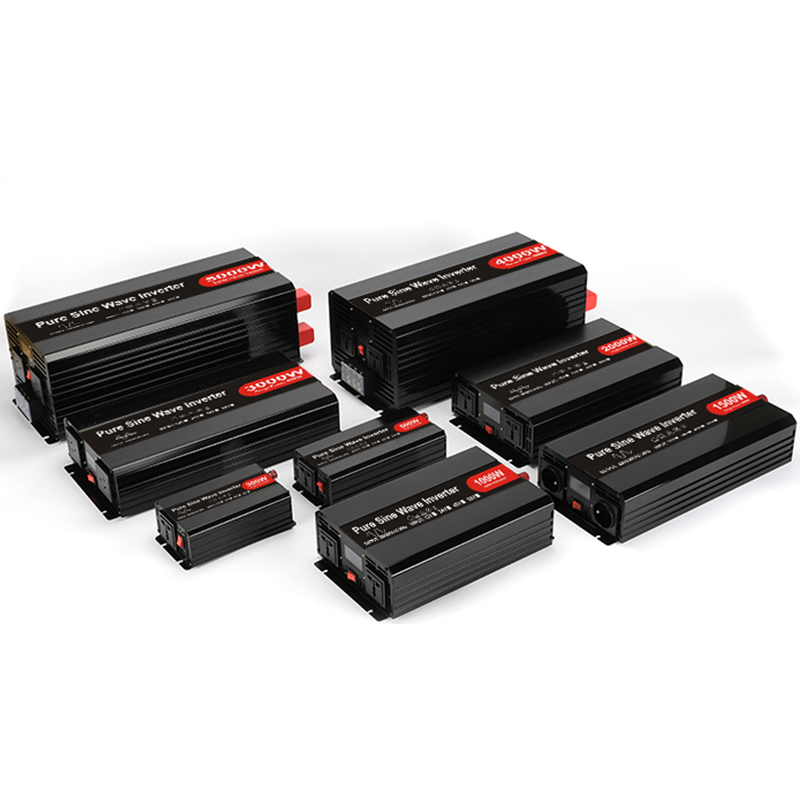
As renewable energy, energy storage, and mobile power systems expand in 2026, pure sine wave inverters have moved from a specialized component to a central piece of modern electricity infrastructure. These devices convert direct current from batteries, solar panels, or vehicle electrical systems into alternating current that closely matches grid-quality power. Unlike modified sine wave inverters, which produce a stepped or rougher waveform, a pure sine wave inverter delivers a smooth, continuous output that is safer for motors, compressors, medical devices, communication equipment, computers, and other sensitive electronics.
The market backdrop supports this shift. The broader sine wave inverter market was valued at about USD 8.27 billion in 2025 and is projected to reach USD 15 billion by 2035, growing at a compound annual growth rate of roughly 6.1 percent from 2026 to 2035. Within the power frequency inverter segment, pure sine wave products already accounted for around 85 percent of the market in 2025, underscoring how strongly buyers now prioritize power quality. For export-oriented buyers, system integrators, and OEMs, this trend means that pure sine wave inverters are no longer just a premium option; they are increasingly the baseline expectation for reliable operation.
One reason for this transition is that modern loads have become more sensitive. A refrigerator compressor, variable-speed air conditioner, power tool, medical monitor, network router, or industrial controller may run inefficiently, overheat, generate noise, or even fail when powered by a low-quality waveform. In contrast, pure sine wave inverters typically achieve total harmonic distortion of 5 percent or less, with many industrial-grade models reaching below 3 percent. That level of waveform purity helps protect equipment, reduces maintenance risk, and improves user confidence, especially in off-grid, backup, or mobile power scenarios.
The 2026 SNEC Shanghai exhibition highlighted how rapidly inverter technology is evolving. Companies such as Sungrow introduced advanced system architectures like the PowerMatrix matrix inverter system, which integrates photovoltaic generation, storage, grid interaction, and loads into a more coordinated energy network. While such large-scale solutions target utility and commercial applications, the same engineering logic is filtering into smaller systems: tighter integration between inverters and battery management systems, faster backup switching, smarter energy scheduling, and stronger grid-support functions. For pure sine wave inverters, this means the product is no longer judged only by output waveform and efficiency, but also by how well it communicates, protects, and adapts to complex energy environments.
AI-driven energy management is another important development. At SNEC 2026, several exhibitors emphasized intelligent forecasting, automated charge-discharge scheduling, and real-time monitoring through mobile applications and cloud platforms. In residential and commercial storage systems, an inverter that produces clean sine wave power can also act as an energy router, deciding when to use solar power, when to charge the battery, when to export to the grid, and when to switch to backup mode. This is especially valuable as electricity markets become more dynamic and as households and businesses seek greater energy independence.
Automotive and mobile power applications are also expanding. Demand for car, RV, truck, yacht, and outdoor power solutions continues to grow, with users expecting compact, efficient, and quiet inverters that can run laptops, cameras, small appliances, communication devices, and portable tools. The global car pure sine wave power inverter market was valued at roughly USD 1.13 billion in 2025 and is expected to reach about USD 2.5 billion by 2035, reflecting an 8.3 percent CAGR from 2025 to 2035. In these applications, pure sine wave inverters are particularly important because vehicles often power mixed loads, including inductive motors and sensitive electronics, which do not tolerate poor waveform quality.
For international buyers, selection criteria in 2026 are becoming more systematic. Power rating should include sufficient headroom for startup surges, especially when driving compressors or motors. Conversion efficiency matters not only for energy savings but also for heat management and long-term reliability. Communication interfaces such as CAN, RS485, or Wi-Fi are increasingly relevant because they allow the inverter to work with lithium batteries, solar charge controllers, remote monitoring platforms, and smart energy systems. Safety features, including overvoltage, overcurrent, short-circuit, overtemperature, reverse polarity, and low-voltage protection, remain essential, particularly for off-grid and mobile installations.
Supply chain and certification issues also deserve attention. Many inverter designs still depend on key power semiconductor modules, and stable component supply can affect delivery timelines and project planning. At the same time, international standards and grid codes are becoming stricter, especially for systems that connect to solar arrays, batteries, or public networks. Buyers sourcing pure sine wave inverters for export should therefore verify electromagnetic compatibility, electrical safety, environmental durability, and any region-specific requirements before finalizing orders.
Looking ahead, the role of pure sine wave inverters will continue to expand beyond simple DC-to-AC conversion. They are becoming intelligent nodes in distributed energy systems, supporting homes, businesses, vehicles, telecom sites, industrial facilities, and emergency power networks. As renewable generation grows, as battery storage becomes more common, and as users demand higher power quality, the pure sine wave inverter will remain a critical bridge between clean energy sources and the devices that depend on stable, reliable electricity.
